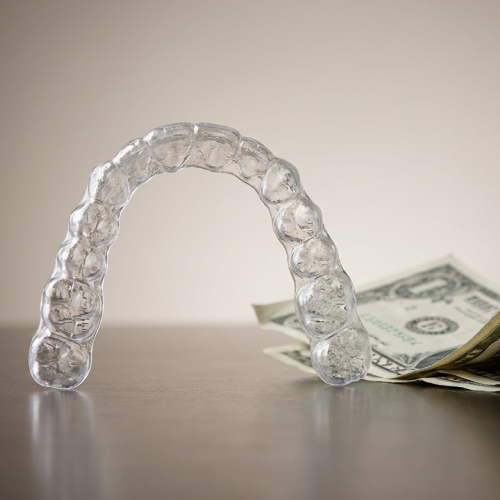
Invisalign Cost: What That Quote Actually Means for Your Smile
Wondering how much does Invisalign cost or if braces are cheaper? Learn what your quote includes and schedule your smile consultation in Spring today!
Read More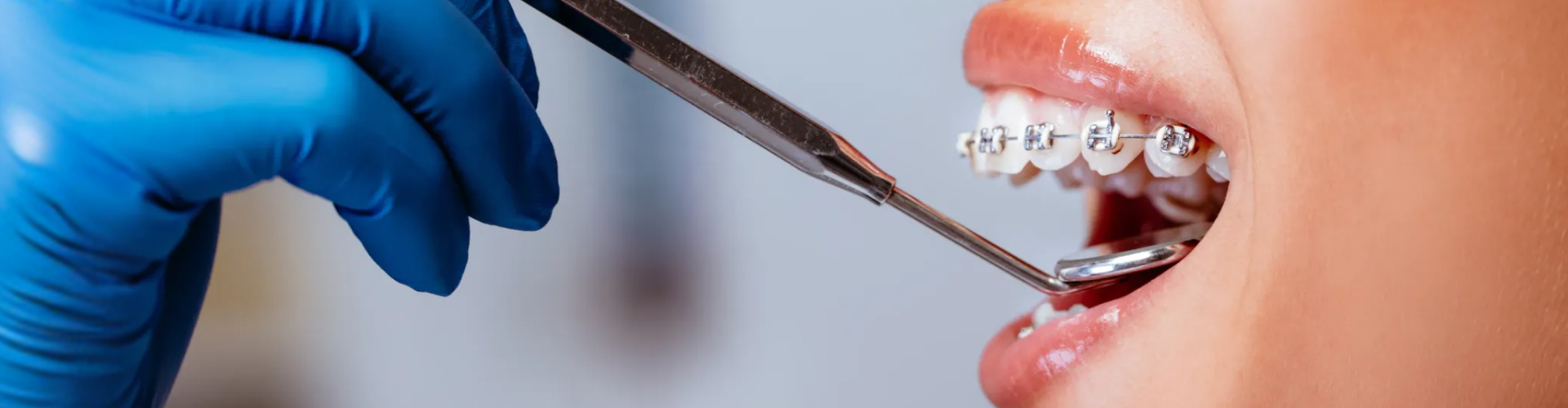
Medically Reviewed by Dr. Ali Tameemi
Invisalign and traditional braces both straighten teeth effectively, but they differ in ways that go far beyond appearance and speed. The right choice depends on your specific bite issues, lifestyle, and how each option handles mid-treatment complications.
For Spring-area patients, standard comparisons rarely tell the complete story. What happens when treatment doesn't go exactly as planned?
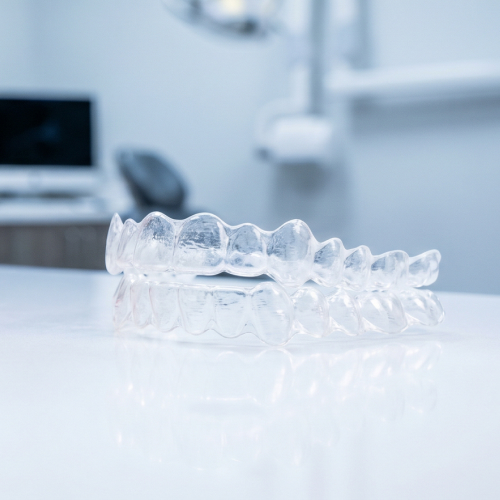
With Invisalign, roughly 30–40% of cases require refinements — additional aligner series created after your original treatment plan runs its course. Each refinement cycle involves new scans, new trays, and extended treatment time. These aren't always included under the original plan, and patients are sometimes surprised to learn their "finished" treatment still has months to go.
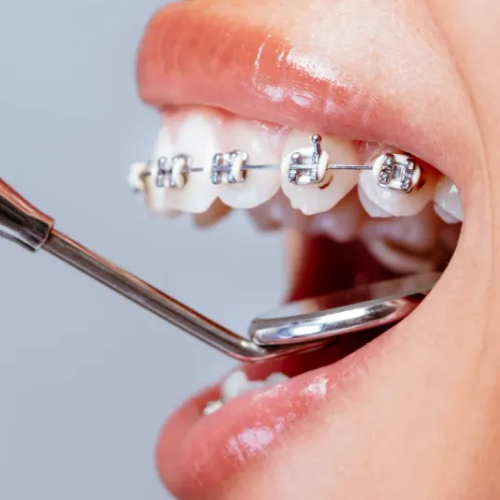
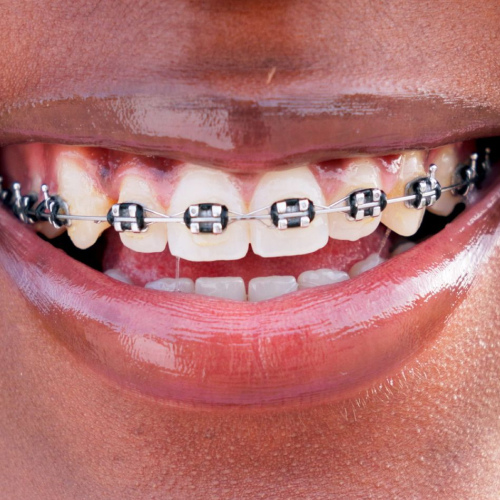
Ceramic braces carry a different mid-treatment risk. According to Healthline, ceramic brackets fracture at more than twice the rate of metal brackets. When a ceramic bracket breaks, it typically requires an unscheduled visit and a replacement bracket — adding chair time and extra appointments that weren't part of the original plan.
There's also a debonding concern worth knowing about. Ceramic brackets bond firmly to enamel, and the process of removing them at treatment's end has been associated with enamel surface damage. For patients with deep overbites specifically, the hardness of polycrystalline ceramic presents another issue: the material can abrade the enamel on opposing teeth during biting contact — a risk that plastic aligners simply don't carry. Aligners create a thin cushion between upper and lower teeth rather than a rigid ceramic surface.
These mid-treatment and end-of-treatment variables don't show up in a side-by-side comparison. They're worth discussing with your dentist before you commit to either system.
The common advice — "braces work better for severe cases" — isn't wrong, but it's far too vague to be useful. The real question is which specific movements each system handles more efficiently.
Dental braces — both ceramic and metal — excel at true bodily root translation, meaning they can move the entire tooth including its root in a controlled direction. They also handle vertical extrusions (pulling a tooth downward into proper position) and severe premolar rotations exceeding 30 degrees with greater precision than aligners. These movements require sustained, three-dimensional force that brackets and wires deliver more reliably than removable trays.
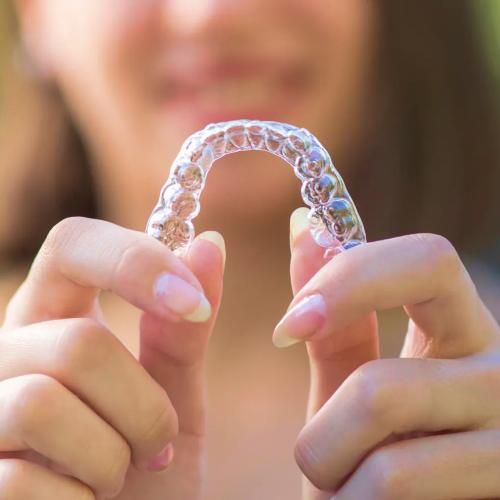
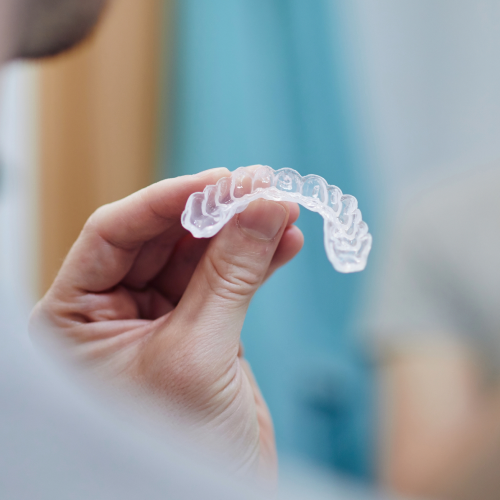
Invisalign performs well — and sometimes faster — for mild arch expansion, simple tipping movements, and cases where interproximal reduction (minor reshaping between teeth) is part of the plan. A Healthline overview of Invisalign notes that treatment time runs anywhere from six months to two years depending on complexity, comparable to braces for many cases.
The compliance factor matters enormously here. As WebMD explains, fixed appliances like lingual or ceramic braces work continuously — there's no user error. Invisalign requires 20–22 hours of daily wear. Patients who remove aligners more than the recommended two hours daily extend their treatment significantly, sometimes beyond what braces would have taken for the same correction.
For overbite correction specifically, both systems can work, but Healthline's review of Invisalign for overbites notes that Invisalign uses progressively adjusted tray pressure to shift teeth over time — an approach that works well for mild to moderate overbites but may fall short for skeletal discrepancies requiring more precise force control.
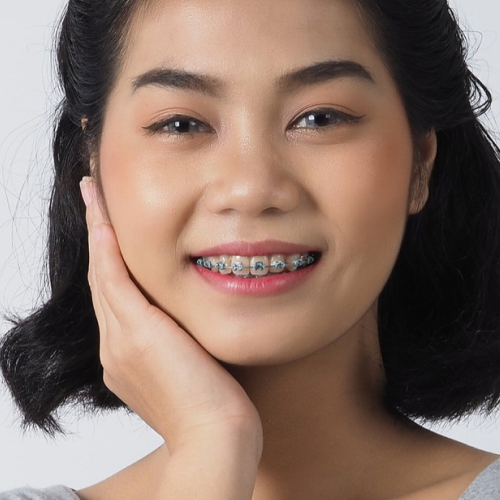
Ceramic braces occupy an interesting middle ground. They're fixed like metal braces — meaning consistent force application — but less visible, using clear or tooth-colored brackets. Healthline's ceramic braces overview notes they can move teeth faster than Invisalign for cases requiring 18–36 months of treatment.
That speed advantage comes with trade-offs:
Invisalign sidesteps most of those hygiene and enamel-safety concerns. Because the aligners are removable, patients can brush and floss normally — a meaningful advantage for anyone managing existing gum disease or cavity risk. Healthline's aligner vs. braces comparison identifies this as a key reason aligners are preferred for patients with co-occurring oral health conditions.
Neither system is universally superior. Ceramic braces win on precision and treatment speed for complex cases. Invisalign wins on oral hygiene access, comfort, and enamel safety for mild to moderate corrections. Your dentist's assessment of your specific bite — not general preference — should drive the decision.
Choosing between Invisalign and braces isn't something to settle based on a blog post alone. The biomechanics of your bite, your oral health baseline, and your lifestyle all factor into which system will actually deliver results on time and without complications.
At Nu Dentistry Spring, our team helps patients in Spring, Texas navigate exactly these decisions with a thorough evaluation and honest guidance. Schedule a cleaning and exam to get a clear picture of what treatment would actually look like for you.
Medical disclaimer: This article is intended for informational purposes only and does not constitute professional dental or medical advice. Always consult a licensed dental provider for diagnosis and treatment recommendations specific to your situation.
Fresh news from the dental world
See what a visit to our modern, state-of-the-art dentist office is like!
Sunday Closed
Monday - Friday 9am - 6pm
Saturday 9am - 3pm
Check out what our patients are saying in Spring, TX


“The Best Dentist In Spring”
We have been looking for a family dentist for a long time, we have tried a bunch of places but nothing felt quite like home. Not too long ago we stumbled upon Nu Dentistry and met Dr. Ali. Not only was he professional, kind, and gentle, but he always finds a way to fit us in when we need an appointment. He’s also pretty funny! I appreciate that he takes the time to explain what he’s doing, before he does it. That really puts me at ease.

“Never Thought I'd Say It”
I never thought I’d say it, but going to the dentist is actually fun now. I recently came in for a root canal, and I got to sit back and catch up on Stranger Things without any pain!

“Anxiety Has Kept Me Away ”
I usually have such huge anxiety when I go to a dentist appointment, which means I always put off visits until the last minute to disastrous consequences. However, Dr. Loggins helped me with sedation, so the entire process was a breeze!
“The Best Dentist In Spring”
We have been looking for a family dentist for a long time, we have tried a bunch of places but nothing felt quite like home. Not too long ago we stumbled upon Nu Dentistry and met Dr. Ali. Not only was he professional, kind, and gentle, but he always finds a way to fit us in when we need an appointment. He’s also pretty funny! I appreciate that he takes the time to explain what he’s doing, before he does it. That really puts me at ease.
“Never Thought I'd Say It”
I never thought I’d say it, but going to the dentist is actually fun now. I recently came in for a root canal, and I got to sit back and catch up on Stranger Things without any pain!
We are proud members of these dental organizations and accreditations


We are dedicated to providing you with only the best quality dental care


