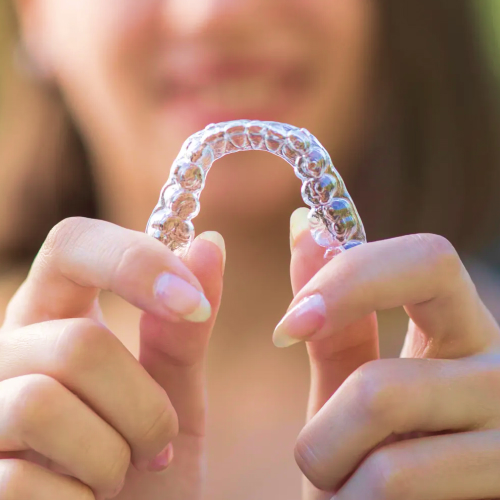
Invisalign and Braces Quotes: What Those Numbers Actually Mean
Wondering if your Invisalign or braces quote is fair? Learn what costs really mean. Book a consultation with Nu Dentistry Spring today!
Read More
Medically Reviewed by Dr. Tameemi
Byte aligners are ceasing operations, leaving thousands of mid-treatment patients with half-shifted teeth and no clear path forward. This guide explains the biomechanical limitations that mail-order aligners never disclosed, and what local Spring-area patients should do right now.
If you're an active Byte patient, stopping treatment abruptly is not a neutral choice. Teeth in motion will relapse. According to the ADA, moving teeth without full professional oversight risks bone loss, receding gums, bite problems, and jaw pain — all of which become more likely when mid-treatment momentum suddenly stops.
Your first priority is retrieving your digital records before any patient portal goes offline. Specifically, you want your 3D STL files — the digital models that capture your tooth positions at each treatment stage. Contact Byte's parent company, Dentsply Sirona, directly via written request (email creates a paper trail). Ask for your full orthodontic record set: the STL files, your prescribed aligner sequence, and any treatment progress notes on file.
Once you have those files, bring them to a local licensed orthodontist or dentist for a transfer evaluation. Here's how that process typically works:
The sooner you act, the more treatment progress you preserve. Waiting weeks while teeth begin shifting back makes the eventual correction more complex and time-consuming.
This is the biomechanical reality that mail-order aligner marketing consistently glossed over. Not all clear plastic trays do the same thing inside your mouth.
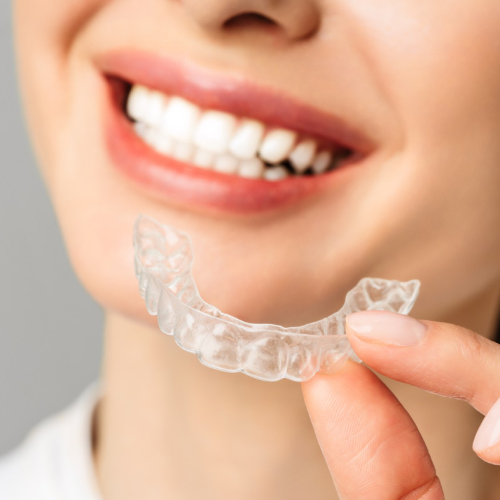
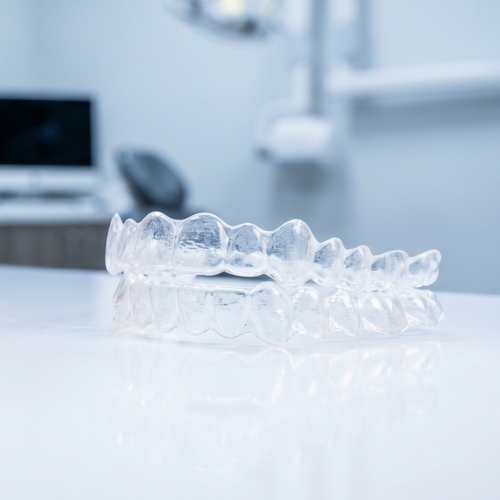
Invisalign treatment — performed by a licensed dentist or orthodontist — typically includes small composite resin "attachments" bonded directly to specific teeth. These buttons give the aligner something to grip, enabling what orthodontists call bodily movement: shifting a tooth's entire root structure through bone in a controlled direction. Without attachments, a tray can only tip the crown of a tooth while the root lags behind. That's not a minor distinction — tipped teeth are less stable, more prone to relapse, and can create posterior open bites that are genuinely difficult to correct later.
Mail-order brands like Byte also cannot perform Interproximal Reduction (IPR) — the precise, in-person enamel slenderizing that creates space for teeth to rotate or close gaps properly. Rotating rounded premolars or closing significant spacing without IPR often produces a cosmetically acceptable front-tooth result while leaving the back bite misaligned.
Research published in PMC confirmed that direct-to-consumer aligner patients receive no direct dentist-patient communication throughout their procedure, meaning nobody is evaluating root position, bone response, or bite changes as treatment progresses.
A Healthline overview of Byte aligners acknowledged that Byte cannot fully treat severe alignment issues — but "severe" in this context includes many cases patients themselves would describe as moderate. The threshold for what mail-order aligners can safely accomplish is narrower than their marketing suggested.
For many Spring-area adults, clear aligners from a licensed provider remain an excellent option. A WebMD article on adult clear aligner treatment notes it's never too late to straighten teeth — and one in three orthodontic patients is now an adult. The real question isn't aligners versus braces in the abstract. It's about matching the right tool to your specific bite.
Choose Invisalign (in-office) when:
That last point matters more than most people realize. Trapping nicotine pouches or vape aerosol inside a sealed plastic tray creates a concentrated acidic microenvironment directly against enamel. Unlike dental braces — where saliva can naturally flow around brackets and buffer acidity — aligners seal that chemical exposure against tooth surfaces for hours. The result is accelerated enamel demineralization and localized gum recession that can appear faster than typical decay patterns. Healthline's comparison of aligners and braces notes that liquids trapped inside aligners can actively damage teeth — and concentrated nicotine chemistry behaves similarly.
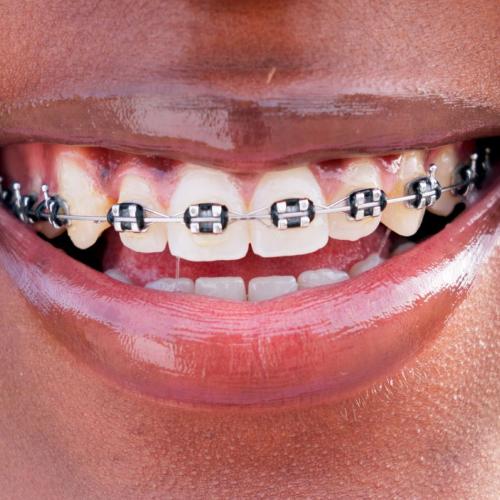
Choose traditional braces when:
Both paths work. Neither works well without professional supervision.
If you were a Byte patient, don't wait for your teeth to drift. Nu Dentistry Spring serves the greater Spring, Texas area and welcomes transfer case evaluations. Our team can review your existing records, assess your current tooth position, and help you finish what you started — or chart a better course forward. Schedule a cleaning and exam or reach out today to schedule your consultation.
Medical disclaimer: This article is for informational purposes only and does not constitute professional dental or medical advice. Always consult a licensed dentist or orthodontist regarding your individual treatment needs.
Fresh news from the dental world
See what a visit to our modern, state-of-the-art dentist office is like!










Sunday Closed
Monday - Friday 9am - 6pm
Saturday 9am - 3pm
Check out what our patients are saying in Spring, TX


“The Best Dentist In Spring”
We have been looking for a family dentist for a long time, we have tried a bunch of places but nothing felt quite like home. Not too long ago we stumbled upon Nu Dentistry and met Dr. Ali. Not only was he professional, kind, and gentle, but he always finds a way to fit us in when we need an appointment. He’s also pretty funny! I appreciate that he takes the time to explain what he’s doing, before he does it. That really puts me at ease.

“Never Thought I'd Say It”
I never thought I’d say it, but going to the dentist is actually fun now. I recently came in for a root canal, and I got to sit back and catch up on Stranger Things without any pain!

“Anxiety Has Kept Me Away ”
I usually have such huge anxiety when I go to a dentist appointment, which means I always put off visits until the last minute to disastrous consequences. However, Dr. Loggins helped me with sedation, so the entire process was a breeze!
“The Best Dentist In Spring”
We have been looking for a family dentist for a long time, we have tried a bunch of places but nothing felt quite like home. Not too long ago we stumbled upon Nu Dentistry and met Dr. Ali. Not only was he professional, kind, and gentle, but he always finds a way to fit us in when we need an appointment. He’s also pretty funny! I appreciate that he takes the time to explain what he’s doing, before he does it. That really puts me at ease.
“Never Thought I'd Say It”
I never thought I’d say it, but going to the dentist is actually fun now. I recently came in for a root canal, and I got to sit back and catch up on Stranger Things without any pain!
We are proud members of these dental organizations and accreditations


We are dedicated to providing you with only the best quality dental care


