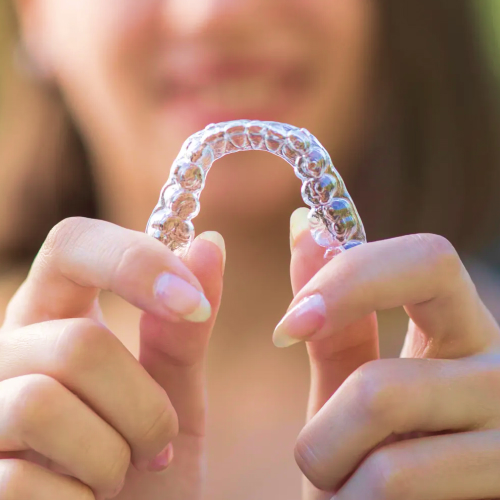
Invisalign and Braces Quotes: What Those Numbers Actually Mean
Wondering if your Invisalign or braces quote is fair? Learn what costs really mean. Book a consultation with Nu Dentistry Spring today!
Read More
Medically Reviewed by Dr. Tameemi
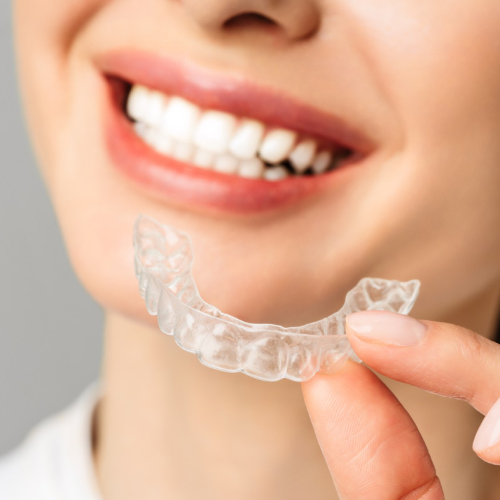
Invisalign attachments are small composite resin bumps bonded to your teeth that help aligners execute complex movements. They're designed to blend in, but they come with some care challenges most patients don't hear about until it's too late.
Before anything else, two attachment issues deserve more attention than they typically get — because the consequences show up after your treatment ends, not during. For Spring-area patients, understanding these risks early can prevent unexpected cosmetic issues later.
The whitening spot trap. Many patients decide to whiten their teeth during Invisalign treatment since the trays seem like a built-in delivery system. The problem is that composite resin — the material used to make attachments — acts as a chemical barrier. Whitening agents cannot penetrate it. When attachments are removed at the end of treatment, the enamel underneath remains its original shade while the surrounding tooth has brightened. The result is a series of darker squares on the center of each tooth. If this has already happened, a dentist can help with pro teeth whitening and targeted whitening after attachment removal, but the safest approach is to hold off on any active whitening until after treatment is complete and your enamel has had a few weeks to re-mineralize.
The porosity problem. A Healthline overview of Invisalign notes that attachments are made from composite resin — the same material used in cavity fillings. Composite resin is significantly more porous than natural tooth enamel, which means it absorbs pigment from coffee, red wine, turmeric, and mustard faster than your surrounding teeth do. The attachments themselves can turn yellow or brown even when your aligners are out. Whitening toothpaste won't fix this — abrasive whitening formulas can actually scratch composite resin, creating more microscopic channels for stain to accumulate. During your regular hygiene visits, a dental hygienist can use a specialized prophy cup to lift surface stains from attachments without scratching them.
High-risk foods and drinks to limit while attachments are bonded:
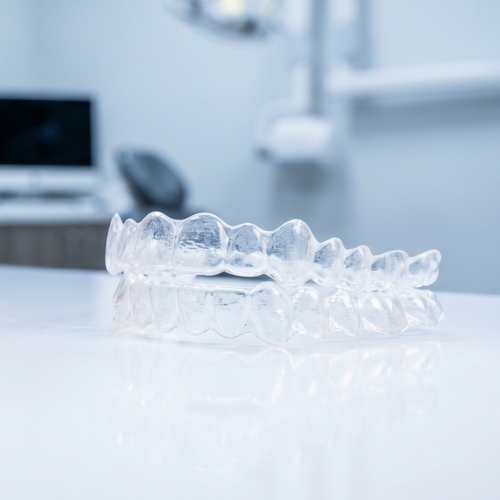
Invisalign works by using a sequence of custom aligners that differ slightly in shape from your current tooth position, creating gentle pressure that moves teeth incrementally. For straightforward alignment, that pressure is often enough. But certain movements — rotation, extrusion, torque, and controlled bodily movement — require more mechanical leverage than a smooth plastic tray can generate alone.
That's where attachments come in. Research published in PMC describes composite attachments as force transducers that increase the contact area between the aligner and the tooth, shifting the point of force application closer to the center of resistance. In practical terms, this allows the aligner to push against a shaped surface rather than a flat one, making complex movements more predictable.
Attachments come in several shapes — rectangular, beveled, and ellipsoid — each designed for a specific type of movement. Rectangular attachments placed horizontally support vertical movement and extrusion. Vertical rectangular attachments facilitate mesiodistal movement. Ellipsoid attachments are typically used for rotation, particularly on rounded teeth like canines and premolars where rotational control is most difficult.
Not every Invisalign patient needs attachments. Simpler cases involving mild crowding or spacing may proceed without them. Your dentist determines attachment placement during treatment planning, based on the specific movements your teeth need to make.
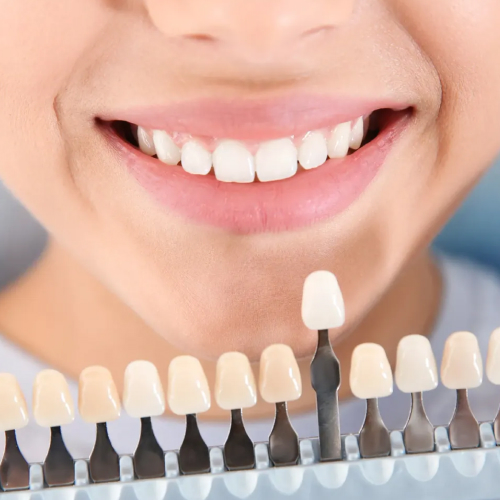
Attachments are designed to be tooth-colored, made from composite resin selected to match enamel shade. In most cases, they're not immediately noticeable in conversation. That said, they are physically raised from the tooth surface and can catch light differently than surrounding enamel.
A study from PMC on esthetic comparisons of composite resins found that esthetic perception is influenced primarily by the translucency and stain resistance of the composite material. More translucent composites tend to blend better with the underlying tooth. The goal is for attachments to "disappear" visually — and with a well-matched composite, most patients find them far less noticeable than they expected.
The bigger visibility concern, as noted above, is staining. A composite that starts out well-matched can shift in shade over months of exposure to pigmented foods and drinks, making attachments more noticeable over time. This is another reason to be mindful of staining agents and to keep up with cleaning and exam visits where a hygienist can address surface discoloration.
Most Invisalign cleaning content focuses on the plastic trays. The attachments themselves — the composite bumps bonded directly to your teeth — create a different hygiene challenge entirely.
Each attachment has edges and ledges. Standard brushing often glides over these micro-surfaces rather than cleaning around them. The result is what clinicians call "plaque halos" — a ring of bacterial buildup framing each attachment site. Left unaddressed, this leads to white spot lesions: areas of permanent demineralization (early decay) that become visible when attachments are removed. This kind of buildup can also contribute to gum disease and gingivitis if plaque is allowed to accumulate along the gumline over time.
According to Healthline's guide on clear aligner care, the basic cleaning protocol involves brushing with a soft-bristled toothbrush and gentle soap — but for patients with attachments, this needs to go further.
Recommended tools for cleaning around attachments:
A systematic review on clear aligner cleaning protocols from PMC confirms that bacteria form biofilms on orthodontic appliances and surrounding enamel, and that areas with physical irregularities — like the ridges around attachment sites — accumulate the most buildup. Consistent, targeted cleaning at every attachment margin is the most important thing you can do to protect your enamel through the course of treatment.
If you're considering Invisalign and want a clear picture of what treatment involves — including whether attachments are part of your plan — Nu Dentistry Spring is here to help. Our team serves patients throughout the Spring, Texas area and will walk you through every detail of your aesthetic dentistry treatment plan before you commit to anything. Reach out to schedule your consultation.
Medical disclaimer: This article is intended for informational purposes only and does not constitute medical or dental advice. Always consult a licensed dental professional for diagnosis and treatment recommendations specific to your situation.
Fresh news from the dental world
See what a visit to our modern, state-of-the-art dentist office is like!









Sunday Closed
Monday - Friday 9am - 6pm
Saturday 9am - 3pm
Check out what our patients are saying in Spring, TX


“The Best Dentist In Spring”
We have been looking for a family dentist for a long time, we have tried a bunch of places but nothing felt quite like home. Not too long ago we stumbled upon Nu Dentistry and met Dr. Ali. Not only was he professional, kind, and gentle, but he always finds a way to fit us in when we need an appointment. He’s also pretty funny! I appreciate that he takes the time to explain what he’s doing, before he does it. That really puts me at ease.

“Never Thought I'd Say It”
I never thought I’d say it, but going to the dentist is actually fun now. I recently came in for a root canal, and I got to sit back and catch up on Stranger Things without any pain!

“Anxiety Has Kept Me Away ”
I usually have such huge anxiety when I go to a dentist appointment, which means I always put off visits until the last minute to disastrous consequences. However, Dr. Loggins helped me with sedation, so the entire process was a breeze!
“The Best Dentist In Spring”
We have been looking for a family dentist for a long time, we have tried a bunch of places but nothing felt quite like home. Not too long ago we stumbled upon Nu Dentistry and met Dr. Ali. Not only was he professional, kind, and gentle, but he always finds a way to fit us in when we need an appointment. He’s also pretty funny! I appreciate that he takes the time to explain what he’s doing, before he does it. That really puts me at ease.
“Never Thought I'd Say It”
I never thought I’d say it, but going to the dentist is actually fun now. I recently came in for a root canal, and I got to sit back and catch up on Stranger Things without any pain!
We are proud members of these dental organizations and accreditations


We are dedicated to providing you with only the best quality dental care


