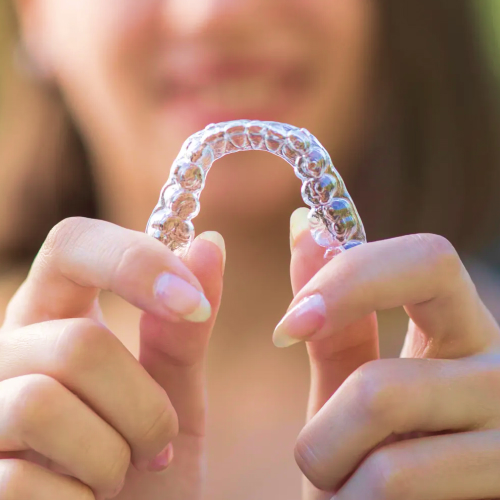
Invisalign and Braces Quotes: What Those Numbers Actually Mean
Wondering if your Invisalign or braces quote is fair? Learn what costs really mean. Book a consultation with Nu Dentistry Spring today!
Read More
Medically Reviewed by Dr. Tameemi
A lower Invisalign quote and a higher quote are often not the same product — they may represent entirely different treatment tiers with different tray limits and refinement policies. Before signing anything, you need to know exactly what your quote includes and who is providing your care.
For Spring-area patients, here's something that catches many off guard: Invisalign isn't a single product. It's a family of tiers, and the tier attached to your quote changes everything.
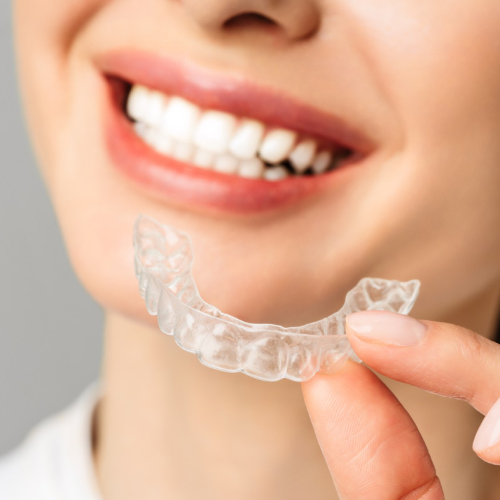
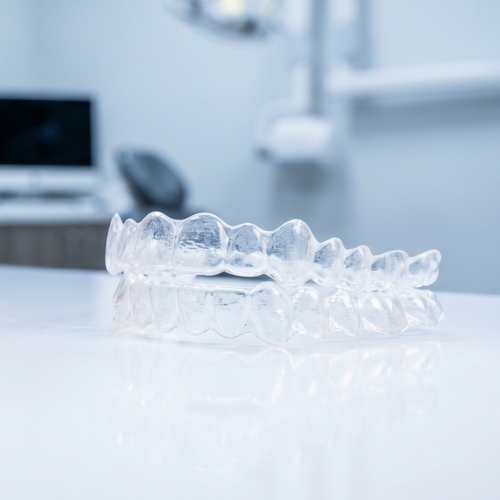
A lower quote typically reflects Invisalign Lite or Invisalign Express — packages designed for mild cosmetic cases involving minor spacing or slight relapse after previous orthodontic treatment. These tiers cap the number of aligners (often 7 to 14 trays) and may include zero or very limited refinements. Once you hit that tray ceiling, additional correction costs extra.
A higher quote typically reflects Invisalign Comprehensive — unlimited aligners and refinements for a defined multi-year window. If your teeth don't respond as planned, your provider can order new trays without charging you again.
Why does this matter? Because someone quoted a lower figure for a moderate crowding case may be getting an underpowered treatment plan. And someone quoted a higher figure for a simple case may be paying for coverage they don't need.
According to Healthline, the complexity of your orthodontic issues directly affects how well Invisalign works for you — which is exactly why matching the tier to the case severity matters so much.
Before accepting any quote, ask your provider directly: Which Invisalign tier is this? How many trays are included? What happens if refinements are needed? Those three questions will tell you whether two very different quotes are actually comparable — or whether you're looking at completely different scopes of treatment.
A quote is a starting point, not a final number. Many orthodontic quotes look competitive until you account for what's not included. Here's what to verify before committing.
1. Are retainers included? Retention is not optional after orthodontic treatment. WebMD notes that wearing aligners without following through on retention can allow teeth to drift back toward their original positions. Vivera retainers (Invisalign's branded option) and replacement sets represent a real additional expense if not bundled in.
2. Does the quote include interproximal reduction (IPR)? IPR is a procedure where small amounts of enamel are removed between teeth to create space for movement. It's routine in many Invisalign cases, but not always included in the headline figure.
3. Are attachment placement and removal covered? Healthline explains that Invisalign attachments — small composite structures bonded to teeth — are commonly needed for complex movements. Placement and removal appointments may or may not be bundled into your quote.
4. What is the refinement policy? Refinements are additional aligner sets ordered mid-treatment when teeth haven't tracked as planned. Comprehensive plans typically include them; limited-tier plans often don't.
5. Are broken bracket or lost aligner replacement fees included? For braces patients, emergency bracket repair fees add up. For Invisalign patients, replacement trays for lost or warped aligners may be billed separately. These situations can sometimes rise to the level of a dental emergency if left unaddressed.
6. Is post-treatment reshaping included? Some patients need minor tooth reshaping (enameloplasty) after alignment. Ask whether this is anticipated and whether it's in scope.
Six questions. That's the difference between a quote that holds and one that doesn't.
Lower quotes often come from general dentists (GPs) who are certified Invisalign providers. Higher quotes often come from board-certified orthodontists. Patients frequently interpret this as arbitrary markup — it isn't.
For straightforward cases — Class I alignment with minor anterior crowding or small spacing gaps — a qualified GP with solid Invisalign experience can deliver excellent results. The clinical complexity is low, the treatment path is predictable, and the lower quote reflects that reality.
For more complex cases — Class II or III malocclusions, deep bites, significant rotations, or cases involving jaw joint concerns — an orthodontist's training is clinically meaningful. Healthline's overview of how braces work notes that orthodontists specialize specifically in correcting misaligned teeth and jaw relationships, a scope that goes beyond cosmetic alignment.
The risk of mismatching provider to case isn't just an outcome issue. Undertreated bite problems can contribute to difficulty cleaning teeth properly, which the American Dental Association links to elevated risk for decay and gum disease over time.
The honest answer: the same quote can represent fair value or poor value depending entirely on who is treating you and what your teeth actually need. A thorough clinical examination — not a quote comparison — is the right starting point. Regular cleaning and exam appointments also help establish a baseline so your provider can accurately assess your orthodontic needs.
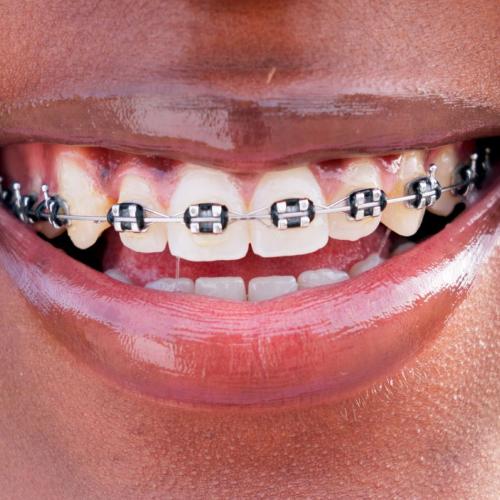
Everything above applies to braces quotes as well. Healthline's breakdown of braces types notes that standard metal, ceramic, lingual, and self-ligating braces each carry different features — and those differences reflect materials, customization, and provider time, not just aesthetics.
A braces quote that seems high may include ceramic brackets, lingual placement, or a longer treatment window for a complex case. A quote that seems low may exclude retainers, emergency repair visits, or mid-treatment adjustments. If you're considering dental braces as an alternative to clear aligners, the same scrutiny applies to understanding exactly what your quote covers.
The same six-question audit applies. Ask what's included. Ask what tier of treatment you're receiving. And ask whether your provider's training matches your case complexity.
If you're weighing Invisalign or braces options in the Spring, Texas area, the right next step is a clinical consultation — not a price comparison. Nu Dentistry Spring provides thorough evaluations so you understand exactly what treatment tier fits your case, what your quote includes, and what to expect throughout your care. Our aesthetic dentistry services are designed to match the right solution to your unique smile goals. Reach out to our Spring team to schedule your consultation.
This article is intended for general informational purposes only and does not constitute professional dental or medical advice. Please consult a licensed dental provider to discuss your individual needs and treatment options.
Fresh news from the dental world
See what a visit to our modern, state-of-the-art dentist office is like!










Sunday Closed
Monday - Friday 9am - 6pm
Saturday 9am - 3pm
Check out what our patients are saying in Spring, TX


“The Best Dentist In Spring”
We have been looking for a family dentist for a long time, we have tried a bunch of places but nothing felt quite like home. Not too long ago we stumbled upon Nu Dentistry and met Dr. Ali. Not only was he professional, kind, and gentle, but he always finds a way to fit us in when we need an appointment. He’s also pretty funny! I appreciate that he takes the time to explain what he’s doing, before he does it. That really puts me at ease.

“Never Thought I'd Say It”
I never thought I’d say it, but going to the dentist is actually fun now. I recently came in for a root canal, and I got to sit back and catch up on Stranger Things without any pain!

“Anxiety Has Kept Me Away ”
I usually have such huge anxiety when I go to a dentist appointment, which means I always put off visits until the last minute to disastrous consequences. However, Dr. Loggins helped me with sedation, so the entire process was a breeze!
“The Best Dentist In Spring”
We have been looking for a family dentist for a long time, we have tried a bunch of places but nothing felt quite like home. Not too long ago we stumbled upon Nu Dentistry and met Dr. Ali. Not only was he professional, kind, and gentle, but he always finds a way to fit us in when we need an appointment. He’s also pretty funny! I appreciate that he takes the time to explain what he’s doing, before he does it. That really puts me at ease.
“Never Thought I'd Say It”
I never thought I’d say it, but going to the dentist is actually fun now. I recently came in for a root canal, and I got to sit back and catch up on Stranger Things without any pain!
We are proud members of these dental organizations and accreditations


We are dedicated to providing you with only the best quality dental care


