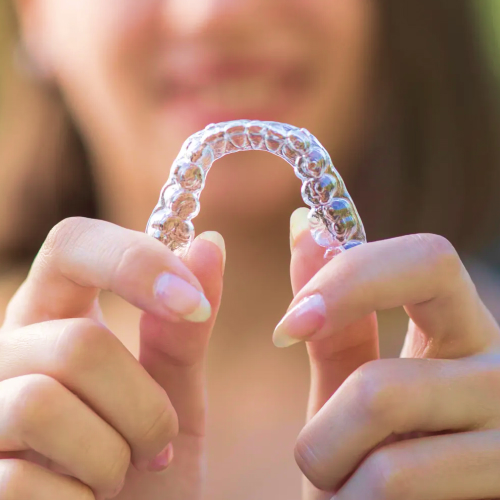
Invisalign and Braces Quotes: What Those Numbers Actually Mean
Wondering if your Invisalign or braces quote is fair? Learn what costs really mean. Book a consultation with Nu Dentistry Spring today!
Read More
Medically Reviewed by Dr. Tameemi
Braces demand real lifestyle adjustments — from what you eat to how you clean — and some of the biggest mistakes patients make aren't about hard candy. This guide covers the foods that break brackets, the foods that stain clear braces, and the surprisingly high "maintenance tax" of both braces and aligners.
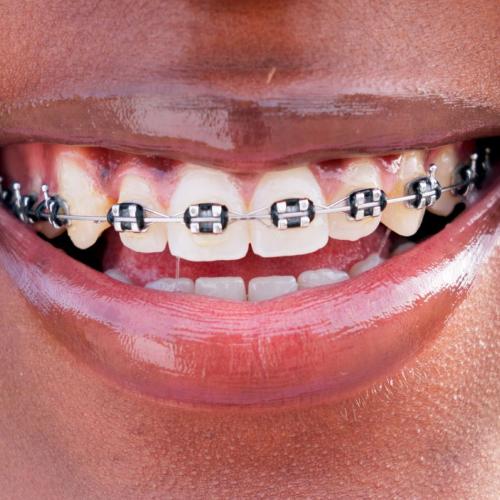
Most braces advice focuses on structural damage — popcorn hulls wedging under wires, hard pretzels snapping brackets. That's legitimate. For Spring-area patients, A Healthline guide on eating with braces confirms that sticky, crunchy, and chewy foods top the avoid list: gum, caramel, ice, nuts, bagels, hard candy, and pizza crust. If you're considering dental braces and want to understand what you're signing up for, the staining issue is just as important as the structural risks.
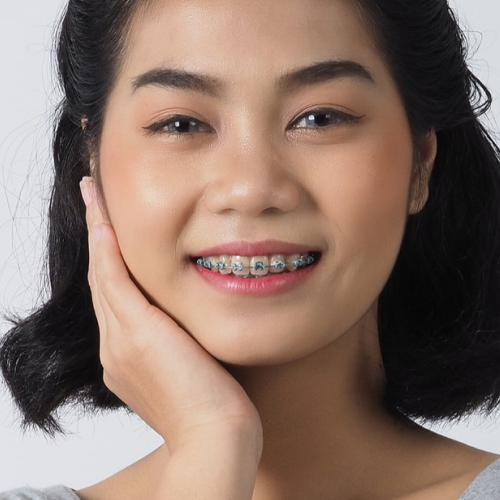
But if you have ceramic (clear) brackets or clear elastic ligatures, there's a second threat most guides skip entirely: staining.
Clear brackets and ligatures are porous. They absorb pigment quickly, and unlike the food stuck in your wire, this staining doesn't rinse away. Within days of eating the wrong foods, your "invisible" braces can turn a visible yellow or brown — and that's permanent until your next adjustment appointment when ligatures get swapped.
High-stain-risk foods to limit with clear braces:
Damage control strategies:
The structural "off-limits" list and the staining list are separate problems requiring separate solutions. Managing both is what actually keeps clear braces looking the way you intended.
Brushing twice daily and flossing once is the baseline, but braces change the geometry of your mouth entirely. Brackets, bands, and wires create new surfaces where plaque accumulates faster than on bare teeth. According to Mouth Healthy from the ADA, plaque buildup around brackets can permanently stain or damage teeth if oral hygiene slips during treatment.
At home, the protocol is straightforward:
What most guides don't address is the situation braces wearers dread most: food visibly stuck in brackets during lunch, a meeting, or a date — with no toothbrush in reach.
The practical answer is a pocket hygiene kit. Keep these on you:
For stealth clearing when you can't access a kit, vigorous water swishing works better than most people expect. Take a full sip, swish forcefully between your teeth and over brackets for 15–20 seconds, and repeat twice. It won't replace brushing, but it dislodges the majority of visible food and reduces the social anxiety that causes many braces wearers to simply avoid eating in public.
Staying on top of your cleaning and exam appointments is especially important during orthodontic treatment, when plaque has more surfaces to hide.
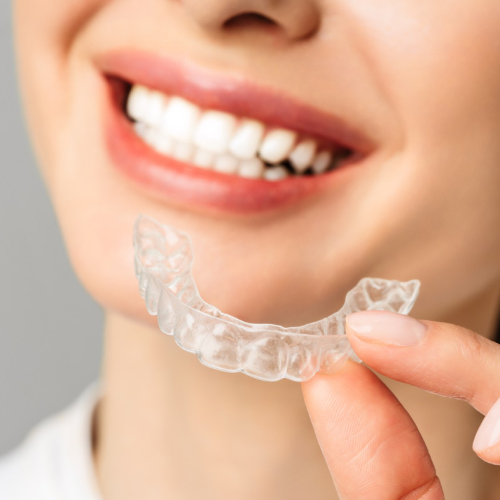
The common assumption is that clear aligners are lower maintenance. Physically, they're easier to clean around — you remove them, brush normally, clean the tray, and replace. WebMD's overview of eating with braces notes that aligner wearers face no food restrictions at all, since trays come out for every meal.
But the lifestyle friction of aligners is real and often underestimated.
Aligners must be worn 22 hours per day to work. Every time you eat or drink anything other than plain water, you remove the trays, eat, brush your teeth, rinse the trays, and reinsert them. At home, this is manageable. In public, it's a different calculation.
The aligner maintenance sequence in public:
Miss any step consistently and treatment extends — or fails. Research published in PMC confirms that aligners worn fewer than 22 hours daily can result in longer treatment timelines or unsuccessful outcomes.
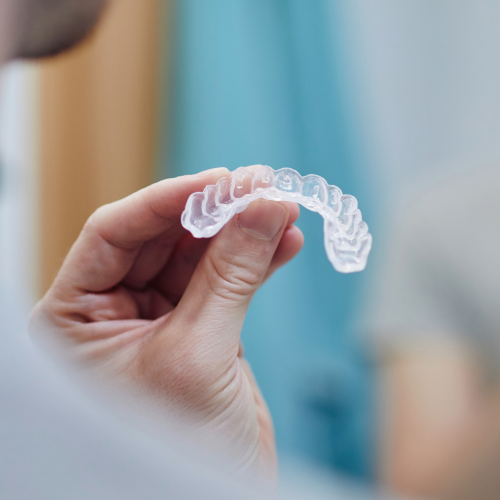
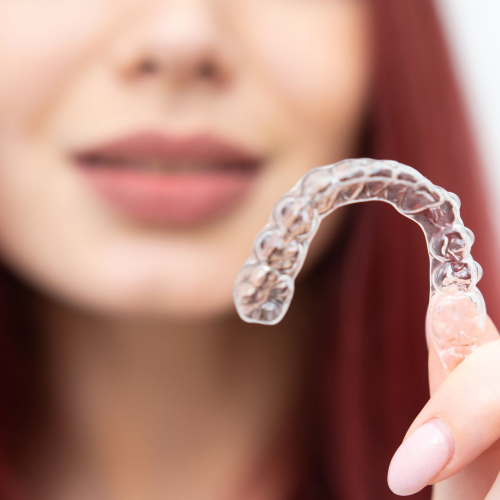
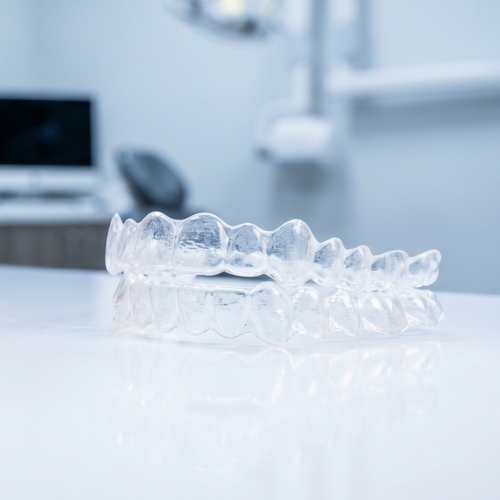
Invisalign is a popular choice for patients who want a discreet option, but the compliance demands are the same regardless of brand — the trays only work when they're in.
Braces, by contrast, are fixed. You eat, you clean later. The maintenance happens on your schedule, not every time you want a coffee or a snack. The tradeoff: braces require more careful brushing and flossing, and the food restrictions are real. Aligners require near-constant behavioral compliance throughout the day.
Neither is objectively easier. They demand different types of discipline — and the right choice depends on your lifestyle, not just your orthodontic case.
The first few days after braces are placed — and after each tightening appointment — teeth become sensitive to pressure. Mouth Healthy from the ADA recommends soft foods during this window, including scrambled eggs, oatmeal, yogurt, mashed potatoes, smoothies, soft-cooked pasta, tofu, and ripe fruit cut into small pieces.
This isn't a permanent restriction. Sensitivity typically peaks between 12 hours and 3 days after adjustment and fades within a week, according to research on orthodontic pain and diet published on PMC. After that window closes, you return to your regular braces-safe diet.
A few practical notes:
The long-term list of permanently off-limit foods stays consistent throughout treatment: anything hard, crunchy, sticky, or requiring a direct bite. If a bracket does break or a tooth is damaged, a dental emergency appointment can address the issue before it affects your treatment progress. The temporary post-adjustment soft diet is a separate, shorter phase that repeats each time your orthodontist tightens your wires.
At Nu Dentistry Spring, we work with patients throughout the Spring, Texas area to find orthodontic solutions that fit their lives — not just their bite. Whether you're weighing metal braces against clear aligners, or you're already in treatment and have questions about care, our team is here to help you navigate every stage with confidence. Reach out to schedule your consultation today.
Medical disclaimer: This article is for informational purposes only and does not constitute professional dental or medical advice. Always consult with a qualified dental professional regarding your specific orthodontic needs and treatment plan.
Fresh news from the dental world
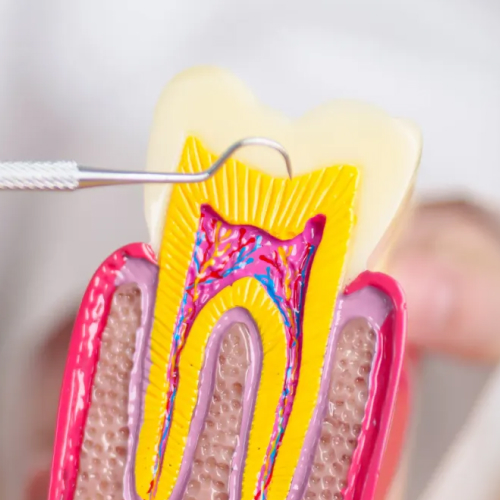
See what a visit to our modern, state-of-the-art dentist office is like!









Sunday Closed
Monday - Friday 9am - 6pm
Saturday 9am - 3pm
Check out what our patients are saying in Spring, TX


“The Best Dentist In Spring”
We have been looking for a family dentist for a long time, we have tried a bunch of places but nothing felt quite like home. Not too long ago we stumbled upon Nu Dentistry and met Dr. Ali. Not only was he professional, kind, and gentle, but he always finds a way to fit us in when we need an appointment. He’s also pretty funny! I appreciate that he takes the time to explain what he’s doing, before he does it. That really puts me at ease.

“Never Thought I'd Say It”
I never thought I’d say it, but going to the dentist is actually fun now. I recently came in for a root canal, and I got to sit back and catch up on Stranger Things without any pain!

“Anxiety Has Kept Me Away ”
I usually have such huge anxiety when I go to a dentist appointment, which means I always put off visits until the last minute to disastrous consequences. However, Dr. Loggins helped me with sedation, so the entire process was a breeze!
“The Best Dentist In Spring”
We have been looking for a family dentist for a long time, we have tried a bunch of places but nothing felt quite like home. Not too long ago we stumbled upon Nu Dentistry and met Dr. Ali. Not only was he professional, kind, and gentle, but he always finds a way to fit us in when we need an appointment. He’s also pretty funny! I appreciate that he takes the time to explain what he’s doing, before he does it. That really puts me at ease.
“Never Thought I'd Say It”
I never thought I’d say it, but going to the dentist is actually fun now. I recently came in for a root canal, and I got to sit back and catch up on Stranger Things without any pain!
We are proud members of these dental organizations and accreditations


We are dedicated to providing you with only the best quality dental care


