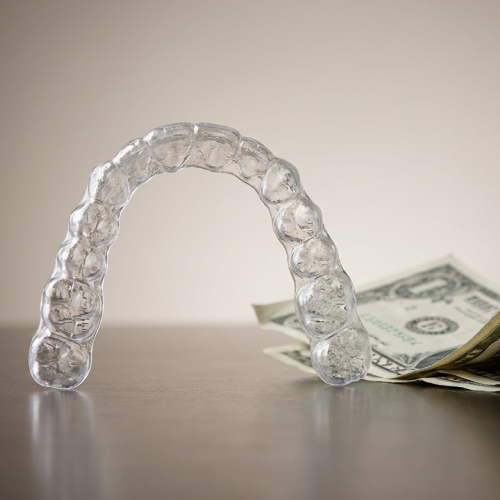
Invisalign Cost: What That Quote Actually Means for Your Smile
Wondering how much does Invisalign cost or if braces are cheaper? Learn what your quote includes and schedule your smile consultation in Spring today!
Read More
Medically Reviewed by Dr. Ali Tameemi
Invisalign pricing varies widely based on treatment tier, case complexity, and your provider's experience level — not just geography. A quote that sounds reasonable may cover far fewer aligners than your case actually needs. The only way to know what's right for your situation is a clinical consultation.
For Spring-area patients comparing quotes, a lower number doesn't always mean a better deal — and a higher one doesn't always mean a rip-off. The variable most people miss is which Invisalign product tier that quote actually covers.
Invisalign is not a single product. Align Technology structures its treatment line into distinct tiers:
A quote at the lower end of the spectrum often corresponds to an Express or Lite package. That's entirely appropriate for minor orthodontic touch-ups. But if your teeth have moderate crowding or a meaningful bite issue, an Express package can leave you stranded — teeth that don't fully track may require refinement trays that aren't included.
There's a second variable almost no one talks about: provider volume tiers. Align Technology operates a tiered wholesale system for its certified providers, ranging from entry-level to Diamond Plus status. Seeking out a high-volume Invisalign provider isn't about chasing a bargain — it's about finding someone whose case volume reflects hands-on experience with complex tooth movements.
According to GoodRx, Invisalign treatment ranges broadly depending on complexity, with simpler cases handled by limited-aligner packages and comprehensive cases requiring significantly more trays and time.
Most Invisalign vs. braces comparisons focus on the upfront quote and stop there. That's an incomplete picture for either option — but the gap is larger with clear aligners.
Traditional braces contracts typically bundle:
Invisalign contracts vary significantly. Many — but not all — include:
What Invisalign contracts frequently exclude:
Before signing any Invisalign contract, ask your provider for a complete scope of treatment — not just the starting agreement. Ask specifically: Are refinements unlimited or capped? Is a retainer included or billed separately? What happens if my teeth don't track as planned?
A Healthline overview of Invisalign costs notes that insurance coverage, when available, applies to the orthodontic treatment itself — but post-treatment retainers and refinements may fall outside what a plan covers.
Both options move teeth through sustained pressure. The differences come down to lifestyle fit, case complexity, and what the contract actually covers.
Factor Invisalign Traditional Braces Visibility Clear, low-profile Metal brackets and wires Removability Removable for eating and cleaning Fixed for entire treatment Comfort Generally milder initial discomfort More friction from brackets/wires Complex cases Best for mild-to-moderate issues Better for severe bite correction Office visits Fewer required More frequent adjustments Post-treatment retainer Often sold separately Usually bundled
Healthline's comparison of braces types notes that traditional dental braces remain the standard for severe misalignment, while Invisalign performs well for mild to moderate cases. For patients with significant overbites, underbites, or rotation issues, braces may still be the clinically appropriate choice regardless of aesthetics.
One practical edge Invisalign holds: the aligners come out for meals, making oral hygiene considerably easier during treatment. Crooked teeth already present a hygiene challenge — CareCredit's overview of clear aligner treatment notes that crowded or misaligned teeth can increase the risk of decay and gum disease, making the outcome of treatment relevant beyond cosmetics.
Healthline's guide on Invisalign effectiveness emphasizes that consistent wear — 20 to 22 hours daily — is the single biggest factor in whether treatment stays on track, regardless of which orthodontic path you choose.
The right treatment tier, the right provider experience level, and a clear understanding of what's included in your contract all matter more than any single number. At Nu Dentistry Spring, our Spring, Texas team evaluates each case individually — so you know exactly what treatment approach fits your smile before committing to anything. Whether you're also curious about options like porcelain veneers or pro teeth whitening to complement your orthodontic results, we're here to walk you through every possibility.
Contact us to schedule a consultation and get a complete picture of your options.
Medical disclaimer: This article is for informational purposes only and does not constitute professional dental or medical advice. Always consult a qualified dental provider for diagnosis and personalized treatment recommendations.
Fresh news from the dental world

See what a visit to our modern, state-of-the-art dentist office is like!
Sunday Closed
Monday - Friday 9am - 6pm
Saturday 9am - 3pm
Check out what our patients are saying in Spring, TX


“The Best Dentist In Spring”
We have been looking for a family dentist for a long time, we have tried a bunch of places but nothing felt quite like home. Not too long ago we stumbled upon Nu Dentistry and met Dr. Ali. Not only was he professional, kind, and gentle, but he always finds a way to fit us in when we need an appointment. He’s also pretty funny! I appreciate that he takes the time to explain what he’s doing, before he does it. That really puts me at ease.

“Never Thought I'd Say It”
I never thought I’d say it, but going to the dentist is actually fun now. I recently came in for a root canal, and I got to sit back and catch up on Stranger Things without any pain!

“Anxiety Has Kept Me Away ”
I usually have such huge anxiety when I go to a dentist appointment, which means I always put off visits until the last minute to disastrous consequences. However, Dr. Loggins helped me with sedation, so the entire process was a breeze!
“The Best Dentist In Spring”
We have been looking for a family dentist for a long time, we have tried a bunch of places but nothing felt quite like home. Not too long ago we stumbled upon Nu Dentistry and met Dr. Ali. Not only was he professional, kind, and gentle, but he always finds a way to fit us in when we need an appointment. He’s also pretty funny! I appreciate that he takes the time to explain what he’s doing, before he does it. That really puts me at ease.
“Never Thought I'd Say It”
I never thought I’d say it, but going to the dentist is actually fun now. I recently came in for a root canal, and I got to sit back and catch up on Stranger Things without any pain!
We are proud members of these dental organizations and accreditations


We are dedicated to providing you with only the best quality dental care


