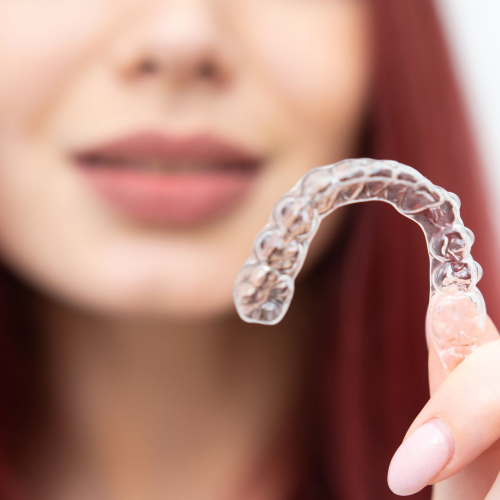
Invisalign Attachments: What They Do, How They Look, and How to Keep Them Clean
Learn what Invisalign attachments do, how they look, and how to keep them clean. Contact Nu Dentistry Spring today to start your clear aligner journey!
Read More
Reviewed by Dr. Ali Tameemi, DDS
For many people, the idea of straightening their teeth sounds great until they picture a mouth full of visible brackets and wires. That is often where hesitation sets in. You may want a better bite, a more even smile, or improved confidence, but you may not love the thought of traditional braces being front and center every time you talk, laugh, or take a photo.
That is exactly why lingual braces catch people’s attention.
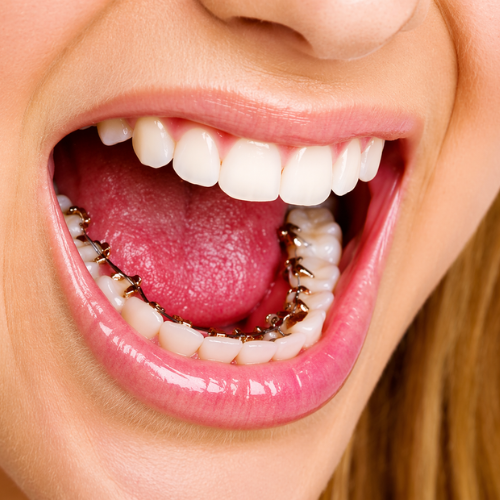
Lingual braces are designed to do the work of braces while staying much more out of sight. Instead of being placed on the front of the teeth, they sit behind them, hidden from view in most everyday interactions. For adults, teens, and professionals who want a discreet orthodontic option, that can feel like the best of both worlds.
At Nu Dentistry Spring, lingual braces can be a great option for patients who want effective treatment with a lower profile. They are not the right fit for everyone, but for the right person, they can be a smart and appealing choice.
Lingual braces are a type of orthodontic treatment that works much like traditional braces, but with one major difference: they are attached to the back surfaces of your teeth instead of the front.
That means they still use brackets and wires to apply steady pressure and gradually shift teeth into better alignment. The science behind them is not dramatically different from regular braces. What changes is the placement.
Because they sit on the tongue side of the teeth, lingual braces are much less noticeable when you smile. Most people will not see them during normal conversation, which is a big reason they are popular with patients who want a more private way to straighten their teeth.
Lingual braces can help correct issues such as:
What makes them a little more complex is that they are typically more customized than traditional braces. Since the backs of teeth are shaped differently from the fronts, lingual braces often need a more precise design and placement process. That customization helps the braces fit better and work more effectively.
In simple terms, they do the same job as braces you can see, but they do it from behind the scenes.
There is a practical reason people ask about lingual braces, but there is also an emotional one.
A lot of adults put off orthodontic treatment for years. Not because they do not care about their teeth, but because they do not want to feel self-conscious during treatment. They may speak in meetings all day, work with clients, attend events, or simply prefer a more subtle option. Lingual braces can make treatment feel more manageable because they let you improve your smile without making your orthodontic care the first thing people notice.
That does not mean they are a luxury option for vanity alone. A straighter smile can also make teeth easier to clean, improve bite function, and reduce strain caused by misalignment. The appearance benefit may get someone interested, but the long-term dental benefits are often just as important.
The honest answer is that lingual braces are not automatically better than traditional braces across the board. They are better for some people, in some situations.
If your main priority is having a treatment option that is less visible, lingual braces may feel like the better choice. They can give you the strength and control of braces without putting brackets on display. For patients who want a discreet solution but need more correction than clear aligners may provide, that can be a major advantage.
At the same time, traditional braces still have benefits. They are often easier to adjust, sometimes more comfortable to adapt to at first, and may be recommended for certain orthodontic cases depending on the complexity of movement needed.
Here is a simple way to think about it:
Lingual braces may be a better option if you:
Traditional braces may be a better option if you:
So, are lingual braces better than traditional braces? Not universally. But for the patient who wants effective orthodontic treatment with a more discreet look, they may absolutely feel better in all the ways that matter most.
That is why a one-size-fits-all answer does not work here. The best option depends on your teeth, your bite, your goals, and your day-to-day lifestyle.
This is one of the most common questions people ask, and it is a fair one.
Yes, lingual braces can feel uncomfortable at first. But that does not mean the discomfort lasts forever or that it is unmanageable.
Because the brackets sit behind the teeth, your tongue notices them almost immediately. In the beginning, it is common to experience:
For most patients, this adjustment period improves with time. Your mouth adapts. Your tongue learns where everything is. Speech usually becomes more natural again. Foods that feel awkward at first become easier to manage. The first couple of weeks are often the biggest hurdle. After that, many people settle into the routine.
It also helps to remember that some degree of discomfort is normal with nearly any orthodontic treatment. Teeth are moving, after all. What matters is whether the treatment is tolerable and worthwhile for your goals. For many lingual braces patients, the answer is yes.
A few ways to make the adjustment easier include:
If you are someone who talks all day for work or is especially sensitive to changes in speech, that is worth bringing up during your consultation. It does not rule lingual braces out, but it should be part of the conversation.
Lingual braces can be a strong fit for patients who want results without the more noticeable appearance of front-facing braces. Adults often ask about them the most, but some teens may also be candidates.
You may be a good candidate if you:
Not everyone is an ideal candidate, though. Tooth size, bite pattern, the shape of the teeth, and the complexity of treatment all matter. In some cases, another orthodontic option may simply make more sense and lead to a smoother experience.
That is why an exam matters. You do not want to choose a treatment based only on how it sounds online. You want to choose it based on whether it actually fits your smile.
No matter which orthodontic option you choose, results are not just about the appliance itself. They are also about consistency.
With lingual braces, success often comes down to a few simple things: keeping your teeth clean, following your dentist’s instructions, showing up for visits, and being realistic about the adjustment period. Patients who go in expecting perfection on day one may feel frustrated. Patients who understand there is a short learning curve usually do much better.
It is also helpful to have a dental team that takes time to evaluate your bite carefully and explain your options clearly. Orthodontic treatment is not something you want to rush into just because a certain option sounds appealing.
Lingual braces are a reminder that orthodontic treatment does not have to look the way many people assume it will. You can improve your smile, correct bite issues, and invest in your long-term dental health without putting metal on the front of your teeth.
For the right patient, that can make treatment feel a lot more approachable. If you have been thinking about straightening your teeth but keep hesitating because you want something more subtle, Nu Dentistry Spring can help you explore whether lingual braces are the right choice for your smile. Schedule an appointment today to take the next step toward a straighter, more confident smile with a treatment option that stays mostly out of sight.
Fresh news from the dental world

See what a visit to our modern, state-of-the-art dentist office is like!














Sunday Closed
Monday - Friday 9am - 6pm
Saturday 9am - 3pm
Check out what our patients are saying in Spring, TX


“The Best Dentist In Spring”
We have been looking for a family dentist for a long time, we have tried a bunch of places but nothing felt quite like home. Not too long ago we stumbled upon Nu Dentistry and met Dr. Ali. Not only was he professional, kind, and gentle, but he always finds a way to fit us in when we need an appointment. He’s also pretty funny! I appreciate that he takes the time to explain what he’s doing, before he does it. That really puts me at ease.

“Never Thought I'd Say It”
I never thought I’d say it, but going to the dentist is actually fun now. I recently came in for a root canal, and I got to sit back and catch up on Stranger Things without any pain!

“Anxiety Has Kept Me Away ”
I usually have such huge anxiety when I go to a dentist appointment, which means I always put off visits until the last minute to disastrous consequences. However, Dr. Loggins helped me with sedation, so the entire process was a breeze!
“The Best Dentist In Spring”
We have been looking for a family dentist for a long time, we have tried a bunch of places but nothing felt quite like home. Not too long ago we stumbled upon Nu Dentistry and met Dr. Ali. Not only was he professional, kind, and gentle, but he always finds a way to fit us in when we need an appointment. He’s also pretty funny! I appreciate that he takes the time to explain what he’s doing, before he does it. That really puts me at ease.
“Never Thought I'd Say It”
I never thought I’d say it, but going to the dentist is actually fun now. I recently came in for a root canal, and I got to sit back and catch up on Stranger Things without any pain!
We are proud members of these dental organizations and accreditations


We are dedicated to providing you with only the best quality dental care


