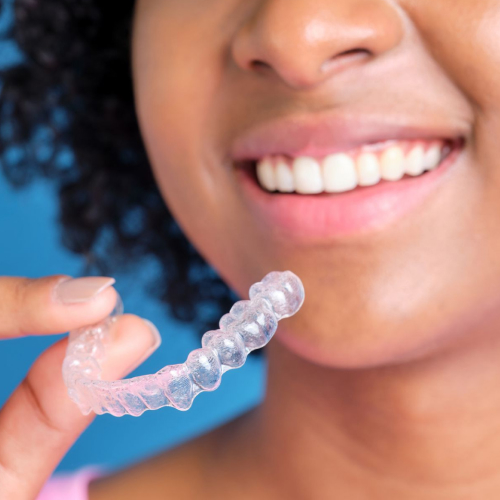
Invisalign Trays Not Fitting? A Spring, TX Dentist Explains Gaps, Tracking, and Refinements
Invisalign trays not fitting right in Spring, TX? Learn about tracking, gaps, and refinements. Call Nu Dentistry Spring today.
Read More
Written by Dr. Ali Tameemi, DDS
Medically Reviewed by Dr. Samir Alrajab, DDS
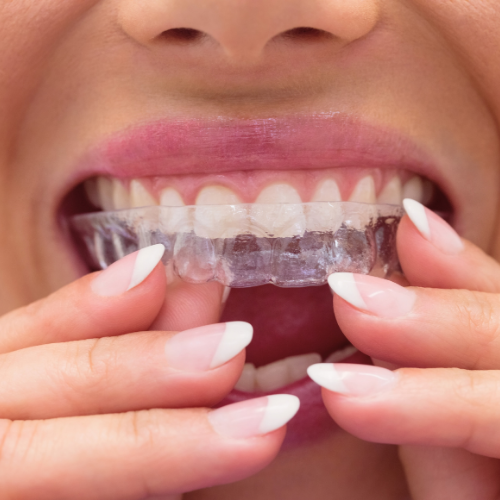
If you've ever popped in a new Invisalign tray and noticed a gap along the bottom edge—like the tray just won't seat fully against your teeth—you're not alone. I hear this from patients in Spring, Texas all the time, and it's one of those things that genuinely causes anxiety mid-treatment. Is something wrong? Did the tray warp? Are your teeth moving the wrong way?
Honestly, the answer depends. Sometimes it's a simple fix. Sometimes it's a sign your treatment needs adjusting. And sometimes, it's just how aligners work.
In this post, I'll break down why gaps happen, what "tracking" actually means, and when refinements come into play—so you can stop guessing and start understanding what's really going on with your Invisalign treatment.
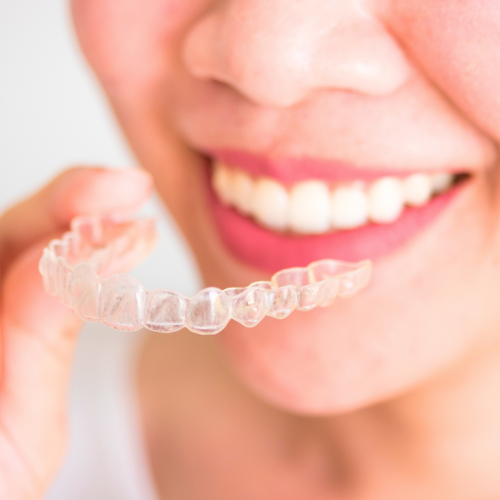
Here's the thing—a perfectly flush fit is actually harder to achieve than most people realize, even under ideal conditions. Research using micro-CT imaging shows that Invisalign aligners have a mean gap width of around 269 micrometers between the tray and the tooth surface, according to a peer-reviewed study. That's a real, measurable gap, built into the physics of the material itself.
But that doesn't mean every gap is normal. Not even close.
There are a few different reasons your tray might not be seating properly:
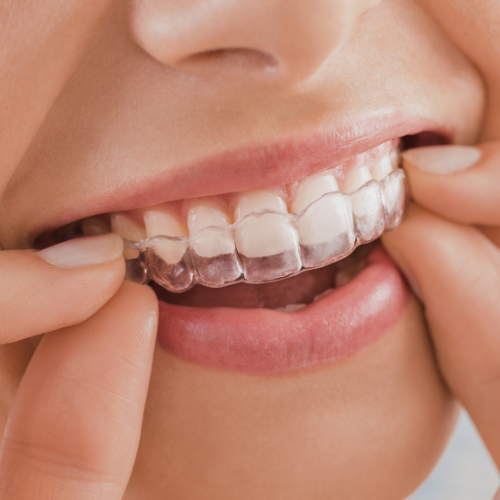
You're in the first few days of a new tray. Aligners adapt to your teeth with wear time. Studies show fit actually improves around the 15-day mark, so early tightness or slight gaps can be normal. Give it a few days before panicking.
The tray got warped. This one surprises people. Rinsing your aligner under hot water, leaving it in a hot car, or even cleaning it incorrectly can deform the plastic. And once it's warped, it won't seat right—full stop. If you want to know how to safely clean your aligners, we've covered that in detail.
Your attachments aren't playing nicely with the tray. Attachments are the small tooth-colored bumps bonded to your teeth that help aligners grip and move specific teeth. If they weren't bonded with the right resin consistency, or if one has chipped or popped off, the tray won't fit the way it was designed to.
You're not wearing them enough. Aligners need 20–22 hours a day. Wear them only 8 hours? Your teeth won't move as planned, and the next tray will feel—and fit—completely wrong.
I had a patient last month who came in convinced her trays were defective. Turns out she'd been soaking them in warm water to "soften" them before inserting. Actually, scratch that—she thought she was helping, which, fair enough, sounds logical. But warmth warps the material. We replaced the affected trays and she was back on track within two weeks.
Bottom line? A small gap isn't automatically a problem. A persistent, large gap that doesn't improve after a week? Call your dentist.
Tracking is essentially a report card for your Invisalign treatment. It measures how closely your actual tooth positions match the planned positions in your digital treatment plan—the ClinCheck® map your dentist or orthodontist created before you started.
Good tracking means your teeth are moving on schedule. Poor tracking means they've drifted from the plan.
How do you know if you're off-track? A few signs:
Look, tracking issues don't always feel dramatic. Sometimes patients don't notice until a check-up reveals the teeth are behind by one or two stages. But the consequences can compound—if you move to the next tray too early without proper tracking, each subsequent tray fits worse, and the whole treatment timeline shifts.
Compliance is the biggest factor. Wearing aligners only part-time significantly reduces movement accuracy—there's no way around it. But complexity matters too. Rotations and root movements are harder to track than simple tipping. I'm not 100% sure why some patients track beautifully through complex movements and others struggle with simpler ones, but my theory is that individual tooth anatomy and bone density play a bigger role than we currently measure.
And here's a mildly controversial opinion: I think some dentists move patients forward too quickly when tracking is borderline. Slowing down and confirming good tracking before advancing trays saves a lot of refinement headaches down the road.
Refinements are additional sets of aligners made after your original series is complete—or sometimes mid-treatment—to correct movements that didn't fully happen as planned. Think of them as a course correction.
And here's what surprises most patients: refinements are incredibly common. About 94% of Invisalign patients need at least one refinement scan. The average is 2–3 rounds. Treatment duration extends by roughly 5 months beyond the original estimate when refinements are factored in.
Does that mean Invisalign doesn't work? No. But it does mean you should go in with realistic expectations about timeline.
The process for refinements is straightforward. Your dentist takes new 3D scans of your teeth, those scans are uploaded, a new set of aligners is designed to address whatever's still off, and you start a new series. The improvement rate after a first refinement is somewhere between 64% and 78%, depending on case complexity.
But here's where it gets interesting—after four or more rounds of refinements, studies show improvement essentially plateaus. At that point, your dentist might recommend finishing with traditional braces for specific tooth movements that aligners just can't reliably achieve.
Are refinements covered? It depends on your plan. Many Invisalign packages include unlimited refinements within a certain window, which, fair enough, is one of the better aspects of the system. Always confirm this before starting treatment.
The cases that tend to need the most refinements are complex ones—significant rotations, large spaces, bite corrections. Simpler cases often sail through with one round or none. But honestly, even mild cases can need a touch-up, and that's not a failure. That's just orthodontics being orthodontics.
If your trays aren't fitting right, or you've got questions about tracking and refinements, the team at Nu Dentistry Spring is here to help. We work with patients across the greater Houston area, including right here in Spring, Texas, and we take Invisalign fit concerns seriously—because a tray that doesn't fit isn't moving your teeth.
Don't wait until a small gap becomes a big setback. Come in, let us assess where you are in your treatment, and we'll map out the clearest path forward. Nu Dentistry Spring is ready when you are.
This content is for informational purposes only and does not replace professional medical advice, diagnosis, or treatment. Always consult with a qualified healthcare provider.
Fresh news from the dental world



See what a visit to our modern, state-of-the-art dentist office is like!





Sunday Closed
Monday - Friday 9am - 6pm
Saturday 9am - 3pm
Check out what our patients are saying in Spring, TX


“The Best Dentist In Spring”
We have been looking for a family dentist for a long time, we have tried a bunch of places but nothing felt quite like home. Not too long ago we stumbled upon Nu Dentistry and met Dr. Ali. Not only was he professional, kind, and gentle, but he always finds a way to fit us in when we need an appointment. He’s also pretty funny! I appreciate that he takes the time to explain what he’s doing, before he does it. That really puts me at ease.

“Never Thought I'd Say It”
I never thought I’d say it, but going to the dentist is actually fun now. I recently came in for a root canal, and I got to sit back and catch up on Stranger Things without any pain!

“Anxiety Has Kept Me Away ”
I usually have such huge anxiety when I go to a dentist appointment, which means I always put off visits until the last minute to disastrous consequences. However, Dr. Loggins helped me with sedation, so the entire process was a breeze!
“The Best Dentist In Spring”
We have been looking for a family dentist for a long time, we have tried a bunch of places but nothing felt quite like home. Not too long ago we stumbled upon Nu Dentistry and met Dr. Ali. Not only was he professional, kind, and gentle, but he always finds a way to fit us in when we need an appointment. He’s also pretty funny! I appreciate that he takes the time to explain what he’s doing, before he does it. That really puts me at ease.
“Never Thought I'd Say It”
I never thought I’d say it, but going to the dentist is actually fun now. I recently came in for a root canal, and I got to sit back and catch up on Stranger Things without any pain!
We are proud members of these dental organizations and accreditations


We are dedicated to providing you with only the best quality dental care


