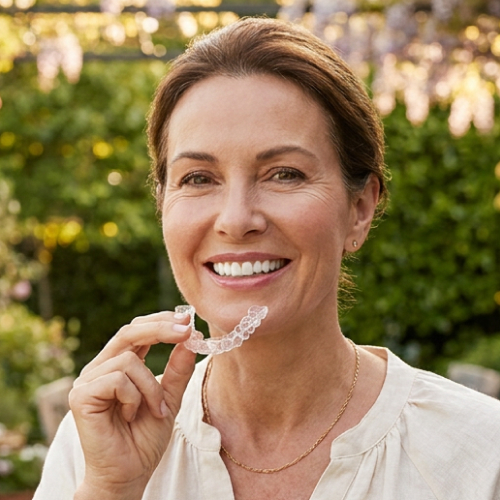
How to Balance Eating, Brushing, and Daily Wear Time with Invisalign
Master your daily Invisalign wear time while enjoying meals. Learn the 30-minute rule, brushing tips, and food advice. Book your Spring consult today!
Read More
Medically Reviewed by Dr. Ali Tameemi
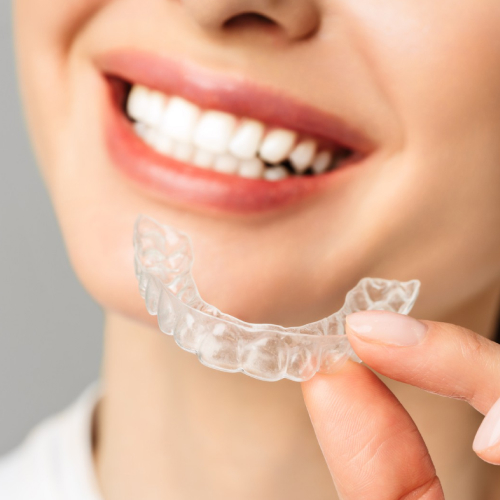
Invisalign works best when you wear your aligners 20–22 hours daily, but eating habits and brushing timing create real challenges most guides skip over. This article covers the enamel-safe way to handle acidic meals, the truth about dietary restrictions with composite attachments, and how to protect your progress every day.
For Spring-area patients, here's a situation almost every Invisalign patient runs into: you eat something acidic — citrus, coffee, a soda — and you need to get your aligners back in quickly to protect your daily wear time. Standard dental advice from the ADA's home oral care guidelines recommends waiting 30–45 minutes after acidic foods before brushing, because enamel softens temporarily and abrasive brushing can accelerate erosion.
But Invisalign's wear target is 20–22 hours per day. With three meals and a few snacks, you're already cutting it close. Brushing immediately after every meal — as most Invisalign guides suggest — puts softened enamel at risk.
The practical workaround is pH neutralization before reinsertion. Rinsing thoroughly with alkaline or remineralizing water immediately after eating raises oral pH back toward neutral, reducing enamel softening. This allows you to safely reinsert your aligners without immediately scrubbing vulnerable enamel. You then complete a proper brush later when the 30-minute window has passed — ideally at your next scheduled cleaning and exam.
This approach respects both goals: protecting enamel and protecting wear time. It won't work as a permanent substitute for brushing, but as a bridge between meals, it keeps your compliance on track without compounding enamel damage.
The broader principle is this — wearing aligners over a mouth that hasn't been rinsed is far less damaging than either skipping wear time or brushing aggressively on acid-softened enamel.
One of the most repeated selling points for Invisalign is that you can eat anything because the trays come out. According to a Healthline overview on Invisalign attachments, many patients also receive small composite resin buttons bonded directly to their teeth to help guide more complex tooth movements.
Those attachments stay on your teeth during every meal. That changes the dietary picture significantly.
High-shear foods pose a real risk. Biting into crusty bread, raw apples, hard bagels, or crunchy granola bars creates lateral shear force directly against composite resin buttons. These attachments are designed to withstand the pressure of aligner trays — not the mechanical stress of aggressive biting. Dislodging an attachment mid-treatment means an unplanned appointment and potential delays. In some cases, a dislodged or damaged attachment can even become a dental emergency requiring prompt attention.
Staining foods are a longer-term problem. Composite resin is porous. Turmeric, saffron, tomato-based sauces, and dark berries can permanently discolor attachments even when your trays are out. Unlike the trays themselves — which you swap every week or two — attachments stay bonded for months. Yellowed or stained attachments affect how your smile looks throughout treatment. If you're concerned about the appearance of your smile, options like porcelain veneers can be explored after treatment is complete.
The practical guidance: treat high-shear and high-pigment foods as restricted foods during Invisalign, not just when trays are in. Cut hard fruits into small pieces. Avoid biting directly into crusty bread. Rinse immediately after eating anything heavily pigmented.
This is a gap that generic Invisalign articles consistently miss — and patients often discover it the hard way after their first dislodged button.
A Healthline article on Invisalign effectiveness confirms the standard: aligners should be worn 20 to 22 hours per day, removed only for eating, drinking anything other than water, and cleaning your teeth. That leaves a 2–4 hour daily window for all meals and hygiene combined.
Mapped out practically, that breaks down to roughly:
That's tight. Lingering over meals, frequent snacking, or long coffee breaks quietly erode compliance. WebMD notes that failing to wear aligners consistently is one of the primary reasons treatment takes longer than expected.
A few habits that protect daily wear time:
Treatment duration varies — Healthline's overview on Invisalign and overbites notes that Invisalign treatment can run anywhere from 6 months to 2 years depending on case complexity. Consistent wear is the single biggest variable within your control.
Compliance and cleanliness go together. Aligners that smell or look cloudy are aligners patients avoid wearing. The good news is that cleaning doesn't need to be complicated.
The core nightly routine: rinse, brush gently with a soft-bristled brush and clear liquid soap, rinse again, and store in a protective case. Avoid hot water — it warps the thermoplastic material and compromises fit. A poorly fitting aligner doesn't apply pressure correctly, which stalls tooth movement regardless of how many hours you wear it.
Avoid toothpaste directly on aligners. Most toothpastes are mildly abrasive and can create micro-scratches that make trays appear yellow and harbor more bacteria over time. Neglecting oral hygiene during treatment can also contribute to gum disease gingivitis, so maintaining a consistent cleaning routine is essential throughout your Invisalign journey.
If you're weighing Invisalign and want guidance specific to your bite, attachment needs, and daily schedule, the team at Nu Dentistry Spring is here to help. Serving patients throughout Spring and the Greater Houston area, we'll walk you through a treatment plan built around your real life — not just the ideal scenario. Explore our full range of aesthetic dentistry services to find the right path to your best smile.
Medical disclaimer: This article is for informational purposes only and does not constitute professional dental or medical advice. Always consult a licensed dental provider for diagnosis and personalized treatment recommendations.
Fresh news from the dental world
See what a visit to our modern, state-of-the-art dentist office is like!
Sunday Closed
Monday - Friday 9am - 6pm
Saturday 9am - 3pm
Check out what our patients are saying in Spring, TX


“The Best Dentist In Spring”
We have been looking for a family dentist for a long time, we have tried a bunch of places but nothing felt quite like home. Not too long ago we stumbled upon Nu Dentistry and met Dr. Ali. Not only was he professional, kind, and gentle, but he always finds a way to fit us in when we need an appointment. He’s also pretty funny! I appreciate that he takes the time to explain what he’s doing, before he does it. That really puts me at ease.

“Never Thought I'd Say It”
I never thought I’d say it, but going to the dentist is actually fun now. I recently came in for a root canal, and I got to sit back and catch up on Stranger Things without any pain!

“Anxiety Has Kept Me Away ”
I usually have such huge anxiety when I go to a dentist appointment, which means I always put off visits until the last minute to disastrous consequences. However, Dr. Loggins helped me with sedation, so the entire process was a breeze!
“The Best Dentist In Spring”
We have been looking for a family dentist for a long time, we have tried a bunch of places but nothing felt quite like home. Not too long ago we stumbled upon Nu Dentistry and met Dr. Ali. Not only was he professional, kind, and gentle, but he always finds a way to fit us in when we need an appointment. He’s also pretty funny! I appreciate that he takes the time to explain what he’s doing, before he does it. That really puts me at ease.
“Never Thought I'd Say It”
I never thought I’d say it, but going to the dentist is actually fun now. I recently came in for a root canal, and I got to sit back and catch up on Stranger Things without any pain!
We are proud members of these dental organizations and accreditations


We are dedicated to providing you with only the best quality dental care


